
Recent Publications
| Pauli crystal superradiance Daniel Ortuño-Gonzalez; Rui Lin; Justyna Stefaniak; Alexander Baumgärtner; Gabriele Natale; Tobias Donner; R. Chitra Arxiv preprint 2505.02837 ArXiv: 🔗 link |
| Bandstructure of a coupled BEC-cavity system: effects of dissipation and geometry David Baur; Simon Hertlein; Alexander Baumgärtner; Justyna Stefaniak; Tilman Esslinger; Gabriele Natale; Tobias Donner Arxiv preprint 2504.17730 ArXiv: 🔗 link |
| Synchronization of Quasi-Particle Excitations in a Quantum Gas with Cavity-Mediated Interactions Gabriele Natale; Alexander Baumgärtner; Justyna Stefaniak; David Baur; Simon Hertlein; Dalila Rivero; Tilman Esslinger; Tobias Donner Arxiv preprint 2504.17731 ArXiv: 🔗 link |
| Quantum circuits based on topological pumping in optical lattices Zijie Zhu; Yann Kiefer; Samuel Jele; Marius Gächter; Giacomo Bisson; Konrad Viebahn; Tilman Esslinger Arxiv preprint 2409.02984 ArXiv: 🔗 link |
| Galilei covariance of the theory of Thouless pumps Tilman Esslinger; Gian Michele Graf; Filippo Santi Arxiv preprint 2408.14579 ArXiv: 🔗 link |
| Dissipative realization of Kondo models Martino Stefanini; Yi-Fan Qu; Tilman Esslinger; Sarang Gopalakrishnan; Eugene Demler; Jamir Marino Arxiv preprint 2406.03527 ArXiv: 🔗 link |
| Stability and decay of subradiant patterns in a quantum gas with photon-mediated interactions Alexander Baumgärtner; Simon Hertlein; Tom Schmit; Davide Dreon; Carlos Máximo; Xiangliang Li; Giovanna Morigi; Tobias Donner Arxiv preprint 2407.09227 ArXiv: 🔗 link |
Welcome to
Prof. Tilman Esslinger's
Quantum Optics Group
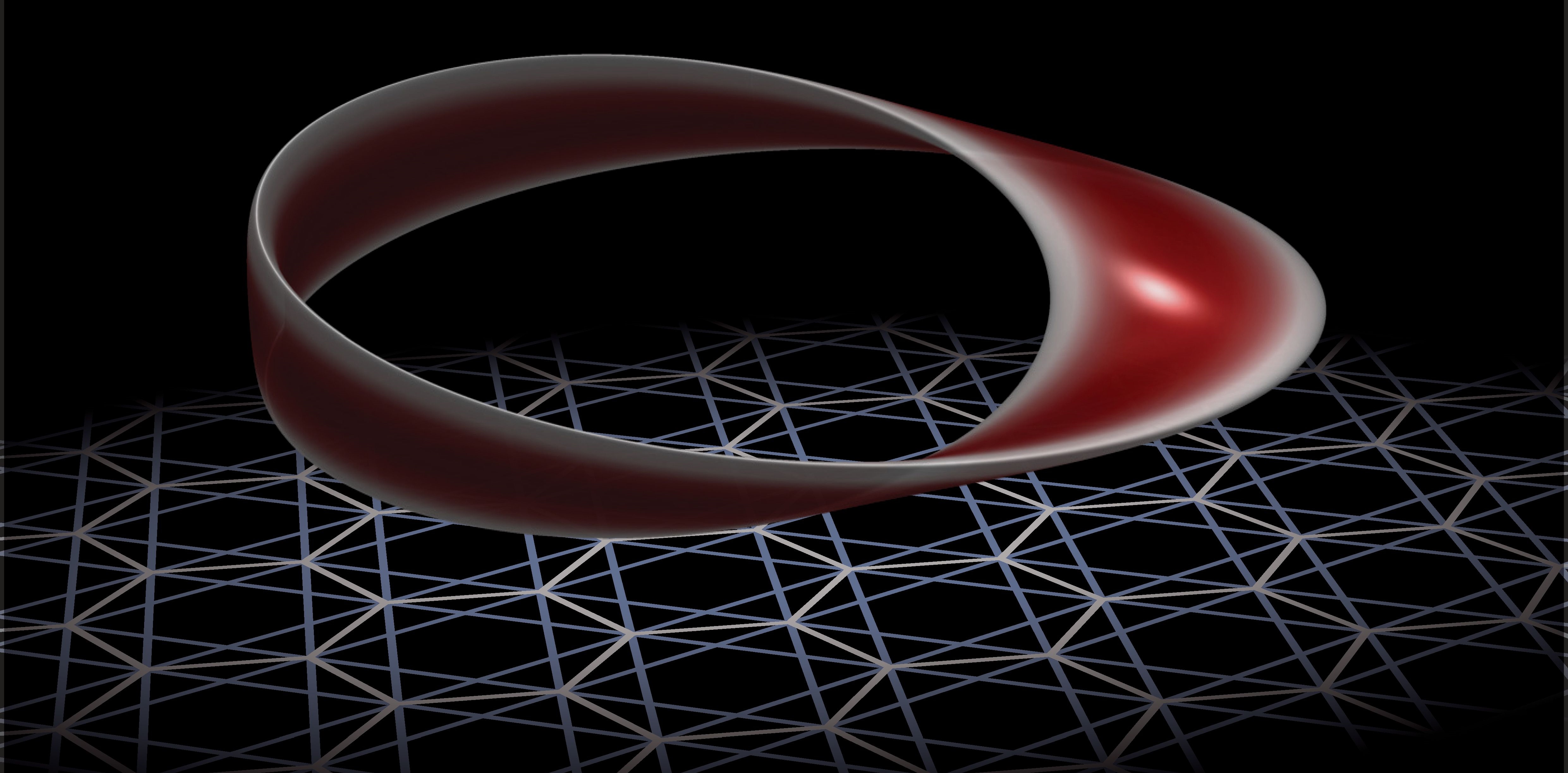
In our research we use ultracold atoms to synthetically create key models in quantum many-body physics.
The properties of the trapped quantum gases are governed by the interplay between atomic motion and a well
characterized interaction between the particles. This conceptual simplicity is unique in experimental physics
and provides a direct link between the experiment and the model describing the system. It enables us to shine
new light on a wide range of fundamental phenomena and address open challenges.
We explore the physics of quantum phase transitions and crossovers, low-dimensional systems and non-equilibrium
dynamics, and thereby establish the basis for quantum simulation of many-body Hamiltonians.
For example, by loading a quantum degenerate gas of potassium atoms into the periodic potential of an optical
lattice we realize Hubbard models with atoms and access superfluid, metallic and Mott-insulating phases.
A many-body system with infinitely long-range interactions is formed by trapping a Bose-Einstein condensate
inside an optical cavity, which has allowed us to observe the Dicke quantum phase transition from a normal
to a superradiant phase. We also work on extending the concepts of quantum simulations to device-like structures
connected to atomic reservoirs, using a combination of high-resolution microscopy and transport measurements.
We further work on offering our quantum simulations as a service, specifically on the Quantum Simulation Transport Platform (QSTP),
the Extended Fermi-Hubbard Quantum Simulation Platform (EFHQSP) and our Matter-Light Quantum Simulation Platforms (MLQSPs).
We acknowledge funding from SNF and ETH Zürich,
NCCR QSIT, SBFI QUIC and the European Union (ERC TransQ, ERC Marie Curie TopSpiD,
ETN ColOpt).

Labs+
News
16 December 2024
Mr. Zijie Zhu successfully defended his PhD thesis.
恭喜! 我们为你骄傲!
16 November 2024
Prof. Dr. Tobias Donner won the Golden Owl award for outstanding teaching.
Congratulations !!
01 October 2024
Nicolò has started his PhD in the cavity team.
Benvenuto !
23 September 2024
Michael has started his PhD in the Lithium team.
Wiukommä !
01 August 2024
Dr. Tobias Donner has been awarded the title of a Professor by ETH Zurich
Congratulations !!
02 May 2024
Mr. Fabian Finger successfully defended his PhD thesis.
Congratulations, well done !!!
26 Apri 2024
Mr. Alexander Baumgärtner successfully defended his PhD thesis.
Congratulations ... we are proud of you !!!
📦 NEWS ARCHIVE
🚑 SAFETY